
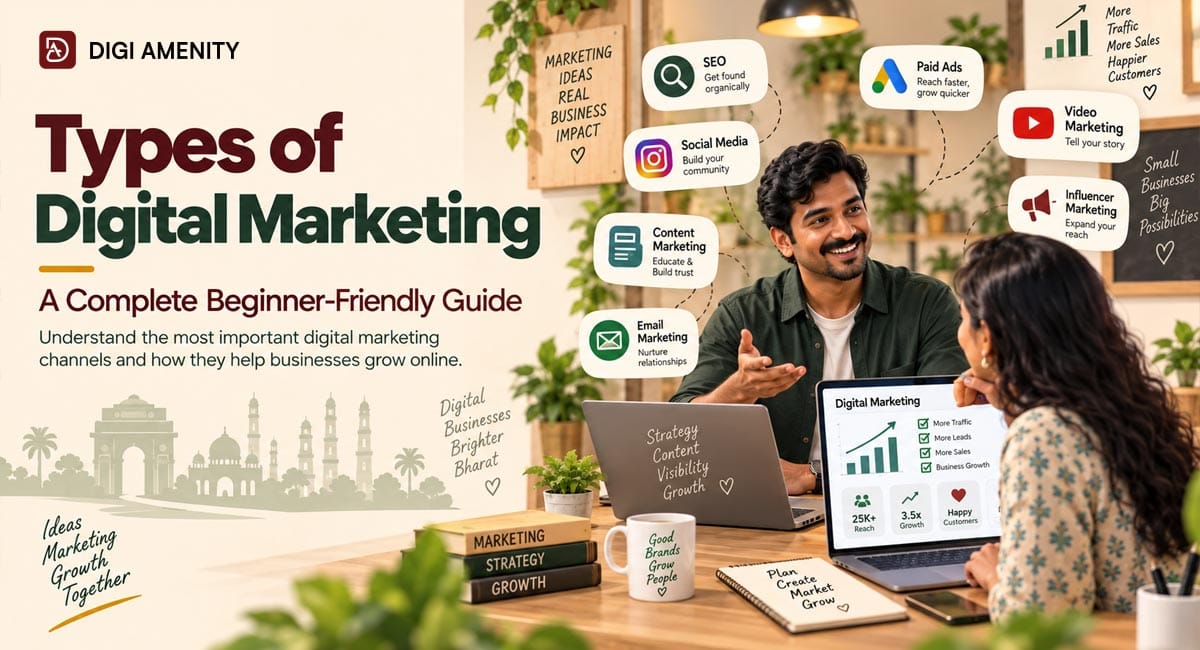
Digital marketing has become one of the most powerful ways for businesses to grow online. Whether you’re running a startup, small business, or large brand, understanding the different types of digital marketing helps you choose the right strategies to reach your audience and drive real results.
In this guide, we’ll break everything down in simple language so you can clearly understand how each method works and when to use it.
What Is Digital Marketing?
Digital marketing is the process of promoting products or services using online platforms like search engines, social media, emails, and websites.
Today, more than 5.3 billion people use the internet, making digital marketing essential for every business.
Why Understanding the Types of Digital Marketing Matters
Because no single marketing method works for everyone. Each business needs a mix of strategies.
By understanding the different types, you can:
- Reach the right audience
- Grow brand awareness
- Generate leads and sales faster
- Improve online visibility
- Increase ROI
- Make smart marketing decisions
13 Types of Digital Marketing (Explained Simply)
Let’s explore the most important types of digital marketing used by businesses today.
1. Search Engine Optimization (SEO)
SEO is the process of making your website more visible on search engines like Google. It includes using the right keywords, creating helpful content, improving website speed, and building authority through backlinks. When done right, SEO helps you get long-term, organic traffic without paying for ads.
SEO includes:
- On-page optimization (keywords, content)
- Technical SEO (site speed, structure)
- Off-page SEO (backlinks)
Example:
If your website ranks on the first page, you get 10x more visibility than websites on page two.
2. Search Engine Marketing (SEM)
SEM uses paid ads to appear at the top of search results instantly. When someone searches for your target keywords, your ad shows up immediately, helping you get quick traffic and leads. It’s great for businesses that want fast results, promotions, or high-intent conversions.
Best for:
Businesses wanting quick traffic, leads, and conversions.
3. Social Media Marketing (SMM)
Social Media Marketing focuses on promoting content organically on platforms like Instagram, Facebook, LinkedIn, and YouTube. It helps businesses build brand awareness, grow communities, and engage with customers through posts, stories, reels, and comments.
- YouTube
It helps build community, trust, and visibility.
4. Social Media Advertising (Paid Social)
This type uses paid ads on social platforms to reach targeted audiences. Brands can run ads for sales, leads, website traffic, or brand visibility. Paid social ads work because they allow precise targeting based on interests, behaviors, age, gender, and location.
You can promote:
- Products
- Offers
- Lead magnets
- Videos
- Services
Platforms include Meta Ads, Instagram Ads, LinkedIn Ads, TikTok Ads, etc.
5. Content Marketing
Content Marketing is all about creating valuable content-like blogs, videos, infographics, podcasts, and guides-to attract and educate your audience. Instead of directly selling, it builds trust and positions your brand as an expert, helping improve SEO and organic traffic.
Includes creating:
- Blogs
- Articles
- Videos
- Infographics
- Guides
- Podcasts
Content marketing:
- Builds authority
- Improves SEO
- Attracts organic traffic
6. Email Marketing
Email Marketing lets you send personalized messages directly to your audience’s inbox. This includes newsletters, promotions, reminders, and product updates. It’s one of the highest ROI channels because you communicate with people who already showed interest in your brand.
You can send:
- Newsletters
- Product updates
- Offers
- Educational content
For every ₹100 spent, email marketing returns an average of ₹1000.
7. Influencer Marketing
Influencer marketing uses creators or influencers to promote your product to their followers. These recommendations feel more authentic and relatable, which helps increase trust and purchase decisions. It works especially well for fashion, beauty, lifestyle, tech, and fitness brands.
Types of influencers:
- Nano: 1K–10K followers
- Micro: 10K–100K followers
- Macro: 100K–1M followers
- Mega: 1M+ followers
Works well for beauty, fashion, lifestyle, food, tech, and fitness niches.
8. Affiliate Marketing
Affiliate marketing allows individuals or websites to promote your products and earn a commission for each sale made through their unique link. It’s a performance-based strategy where you only pay for real results, making it cost-effective for e-commerce and digital products.
Best for:
E-commerce, online courses, software companies.
Example: Amazon Affiliate Program.
9. Video Marketing
Video Marketing involves creating engaging videos to promote your brand, product, or message. Platforms like YouTube, Instagram Reels, and Facebook drive high engagement because videos capture attention quickly. It helps increase brand awareness, trust, and conversions.
Platforms:
- YouTube
- Instagram Reels
- Facebook Video
Videos can boost engagement, trust, and conversions.
10. Mobile Marketing
Mobile marketing focuses on reaching users on smartphones through SMS, WhatsApp messages, mobile apps, push notifications, and mobile-friendly websites. Since most people browse through their phones, this type ensures customers can engage with your brand anytime, anywhere.
- SMS campaigns
- WhatsApp marketing
- Mobile apps
- Push notifications
Great for real-time communication.
11. Online Reputation Management (ORM)
ORM helps maintain a positive image of your brand online. It includes responding to reviews, managing feedback, and improving how people perceive your business. A strong online reputation builds trust and influences customer decisions, especially for service-based industries.
ORM includes:
- Responding to reviews
- Managing comments
- Improving brand sentiment
Important for local businesses and service-based industries.
12. Conversion Rate Optimization (CRO)
CRO is the process of improving your website or landing page to turn visitors into customers. It includes testing different layouts, headlines, call-to-action buttons, and images to increase conversions. Even small improvements can significantly boost sales and leads.
Includes optimizing:
- Landing pages
- Call-to-actions
- Forms
- Checkout process
Even a small 1% improvement can increase sales significantly.
13. Marketing Automation
Marketing automation uses software to handle repetitive tasks like emails, messages, lead scoring, and customer follow-up. It helps businesses save time, personalize communication, and nurture leads more effectively. Tools like HubSpot, Mailchimp, and Zoho make automation easy and scalable.
- Auto email sequences
- Chatbots
- CRM automations
- Lead scoring
Platforms: HubSpot, Zoho, Mailchimp, ActiveCampaign.
Which Digital Marketing Type Is Best?
It depends on your goals:
| Goal | Best Digital Marketing Type |
|---|---|
| Get fast results | SEM, Social Ads |
| Build long-term visibility | SEO, Content Marketing |
| Boost engagement | Social Media Marketing, Video |
| Generate leads | Paid Ads, Email Marketing |
| Grow brand trust | Content, SEO, Influencers |
Most businesses use a mix of all strategies for maximum growth.
Final Thoughts
Digital marketing continues to evolve, and businesses that understand its types can grow faster and stay ahead of competitors. Whether you’re a beginner or a business owner, learning how these methods work will help you take smarter steps toward online success.
