

The Search Analytics API update announced on 16 November 2026 adds branded-query classification, web multimodal reporting and filters for multiple countries or devices to automated Search Console reporting. Before replacing an existing dashboard, check property eligibility, keep comparison periods consistent and distinguish unavailable data from zero activity.
For an Indian business owner, the useful question is not whether the dashboard has another chart. It is whether the new breakdown changes a decision: which page needs attention, which market deserves investigation, or whether a traffic movement comes from people already searching for the brand. Digi Amenity recommends agreeing on those decisions before commissioning a reporting rebuild.
What changed in the Search Analytics API update?
Google’s 16 November announcement brings three capabilities from the Search Console reporting interface into API workflows. The brandedClassification dimension separates brand and non-brand reporting for eligible properties. The webMultimodal search type covers Google Lens, Circle to Search on Android and image uploads in Google Search. The filterLists field accepts multiple countries or devices in one request.
This is a reporting change. It is not an instruction to rewrite a website, and it does not establish that rankings or revenue changed. Existing reports should remain available while the reporting owner checks the replacement. A connector may need an update before its interface exposes a newly supported API option.
Documentation checked on 22 November 2026. The workflow below is a proposed implementation and review process, not a completed client test.
Who should check eligibility before using the new fields?
Start with the authorised Search Console property. The API reference limits branded classification to eligible top-level properties with sufficient query and impression volume, with data starting on 21 February 2026. An unavailable brand breakdown must not become a chart labelled “zero branded searches”. Google’s branded-filter explanation provides the eligibility context.
For an Indian business, check the property and the actual reporting tool rather than assuming access from geography alone. Ask the analyst to identify the exact property, confirm permission and show the returned result or error. Keep credentials and private query exports inside authorised systems.
The native classification and a manually maintained brand-name pattern are different methods. If your old report used a list of spellings, retain that definition in the migration notes. The Search Console regex guide can help explain the older method, but it should not be silently relabelled as Google’s native classification.
What should your reporting contract specify?
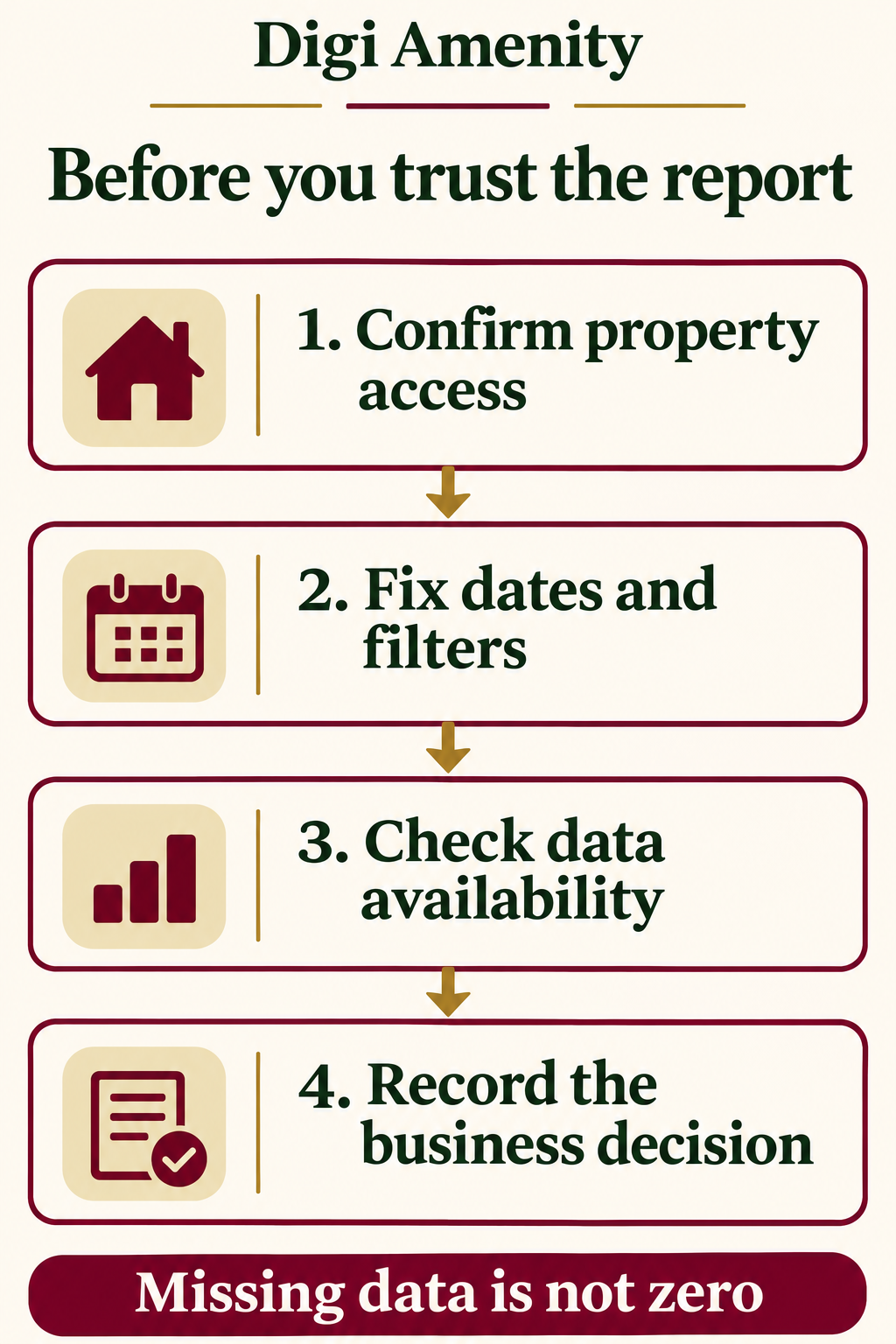
Write one short specification that both the analyst and the business owner can approve. Begin with the question, not the API field. “Has discovery traffic to our consultation pages changed?” needs a different report from “Are customers searching for our brand after a campaign?”
| Field | Record before building | Acceptance question |
|---|---|---|
| Decision | One action the report may inform | Who will act on the finding? |
| Scope | Property, pages, search type, countries and devices | Are both periods using the same scope? |
| Time | Complete date windows and extraction time | Are recent incomplete days excluded? |
| Classification | Native brand classification or documented custom method | Has the method changed between periods? |
| Availability | Returned data, unavailable, permission error or pending | Could a blank be mistaken for zero? |
| Evidence | Saved request definition and local result snapshot | Can another reviewer reproduce the comparison? |
This worksheet is an original practical planning asset, not a Google product template. Add an owner and review date to each unresolved row. If nobody can explain the property or filter definition, postpone the business interpretation rather than polishing the chart.
How should the analyst validate the implementation?
First, retain a baseline export from the existing report with its filters documented. Second, run the new report for a small, complete period. Third, compare like-for-like outputs and investigate differences before expanding the automation. Fourth, preserve both definitions when the old and new methods intentionally measure different things.
The current API reference documents important constraints: branded classification cannot be combined with a query filter in the same request; the same dimension cannot be filtered through both single-value filters and filter lists. The API also does not guarantee every data row. These are reasons to validate request design and label coverage, not reasons to invent missing values.
Ask for a short acceptance record: one successful authorised request, one documented unavailable-data case, confirmation that dates and filters match the comparison, and an explanation of any totals that differ. This article does not supply a production-ready integration or claim an API request was executed against your property.
A recurring job also needs an error path. If a connector stops returning a field, the dashboard should show a warning with the last successful refresh time. It should not replace yesterday’s evidence with a convincing-looking zero. Keep the previous snapshot available so the analyst can distinguish a collection failure from an actual change.
How do you turn the breakdown into a business decision?
Hypothetical example: a furniture business serves India and also receives enquiries from overseas buyers. Its headline organic clicks appear steady, but the owner wants to know whether new customers are discovering its made-to-order collection. The analyst proposes separate brand and non-brand views with the same country, device and page scope.
If the non-brand view weakens while the brand view holds steady, the next action is to inspect relevant pages and queries, not immediately cut the whole SEO budget. Check whether product availability, page changes, search demand or the reporting definition changed. If the brand breakdown is unavailable, record that limitation and use another explicitly labelled analysis. This example contains no observed client result.
Likewise, a multimodal chart is useful only when it answers a relevant product-discovery question. Keep its search type clearly labelled; do not call it total AI visibility or treat it as evidence about another company’s assistant. The multimodal reporting guide explains the related reporting context.
What should you measure beyond clicks?
Connect search reporting to the business journey without pretending that one source contains everything. Search visibility, website visits, valid enquiries and completed sales are different observations. A page can attract relevant visitors yet lose them through an unclear offer, a difficult form or slow follow-up.
Keep the definition of a qualified enquiry explicit. Compare landing-page behaviour and confirmed business outcomes in their appropriate systems, with matching periods and documented attribution limits. Do not describe a correlation between a search segment and sales as proof that the segment caused those sales.
For the first reporting cycle, judge the migration on reliability: can the owner identify the scope, distinguish missing data and repeat the comparison? Once the report is trustworthy, record the resulting action and a remeasurement date. A dashboard rebuild that produces no clearer decision has not yet solved the business problem.
Frequently asked questions
Is this an update to Google Analytics?
No. This article concerns Search Console’s Search Analytics API. Keep website analytics and search-performance reporting labelled separately so clicks are not presented as sessions or enquiries.
Does every property receive branded classification?
No. Eligibility matters. Check the property and the current documentation, and preserve an unavailable status when the breakdown cannot be returned. Do not infer that the business has no brand demand.
Can an agency keep its existing regex brand report?
Yes, as a documented custom analysis. Keep the method visible and compare it separately during migration. Changing the classification method can change the result even if customer behaviour is unchanged.
Will my reporting connector update automatically?
Do not assume that API support means your particular connector exposes the fields. Ask its owner to demonstrate the available options and a successful result for your authorised property before promising a new report.
Should the new report replace the old one immediately?
Run a short parallel comparison first. Retain the old definition, explain differences and approve the new report only when its scope and error handling are clear. This also gives the team a useful rollback reference.
Does this update improve rankings?
The update provides reporting capabilities. Better evidence may support better decisions, but it does not promise ranking gains. Record the website or marketing action separately and evaluate its outcome with appropriate evidence.
Need a clearer SEO reporting handoff?
If your reports show traffic movement but leave the next action unclear, Digi Amenity can review the property, filters, page priorities and enquiry definitions through its SEO reporting and optimisation work before you change the content plan or budget.
