

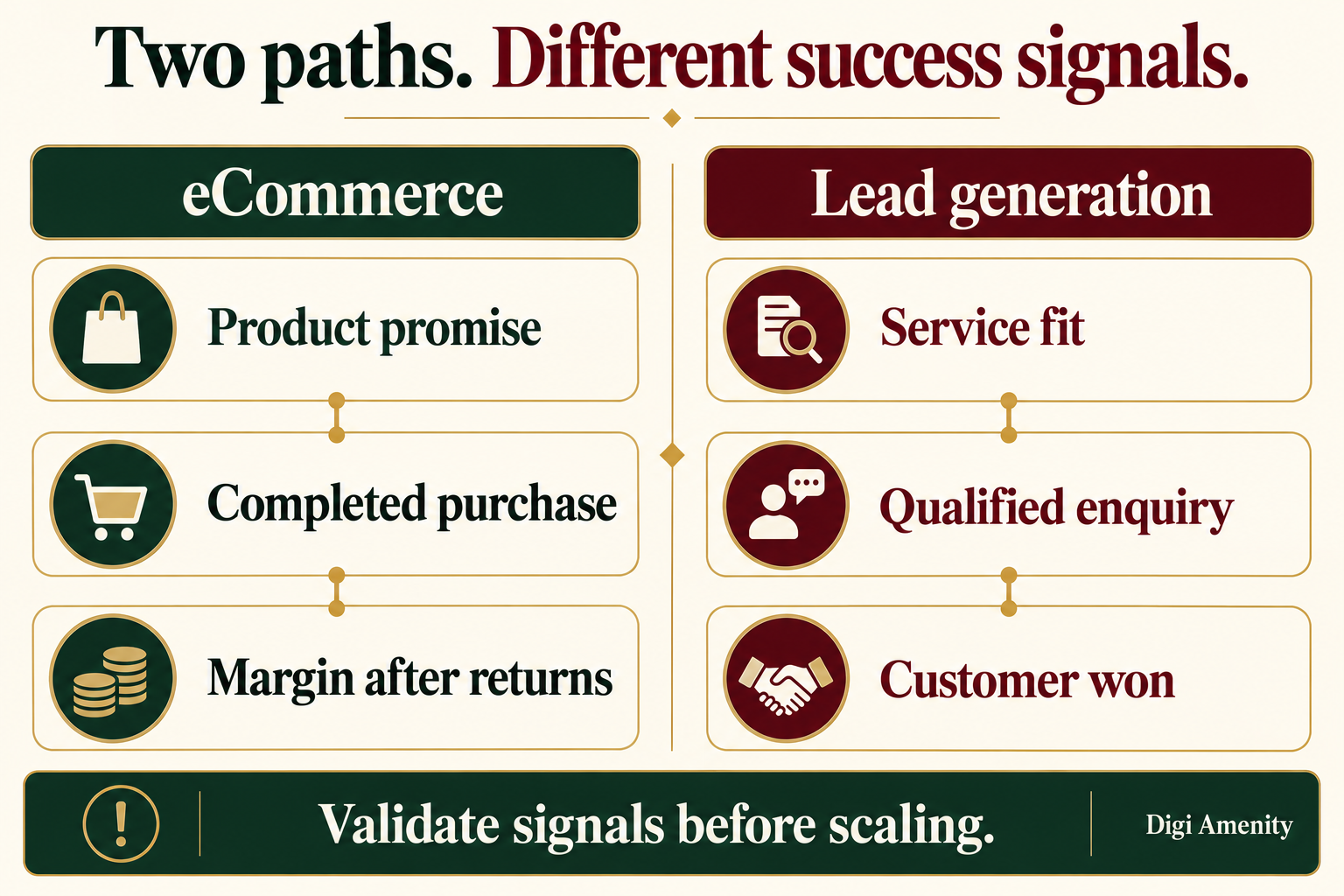
The Meta Andromeda update concerns the system that shortlists eligible ads for later ranking. For advertisers, the sensible response is to develop relevant creative concepts, validate business signals and measure the outcomes that matter—not rebuild every campaign around an unverified algorithm hack. eCommerce brands should connect advertising to purchases and contribution margin. Lead-generation brands should connect enquiries to qualification, appointments and customers.
This guide separates Meta’s published explanations from Digi Amenity’s practical recommendations. It covers the original announcement, the October 2026 development and different operating plans for online stores and service businesses in India.
What is Meta Andromeda, and when did it change?
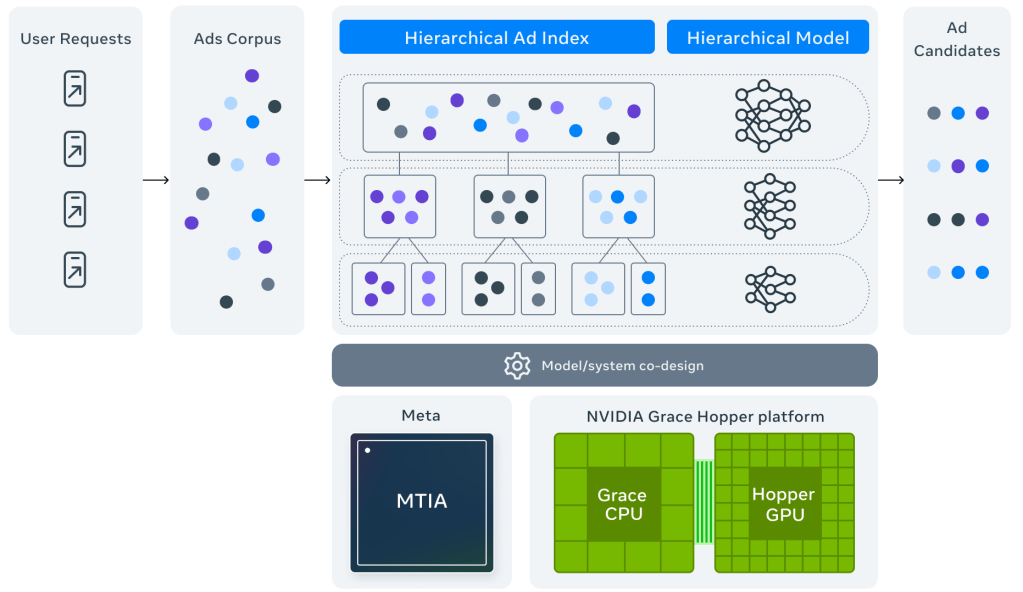
Meta’s 2 December 2024 engineering announcement describes Andromeda as a personalised ads retrieval engine. Retrieval selects a smaller group of candidates from a much larger eligible pool; later ranking models assess candidates in more detail. It is one stage of ad recommendation, rather than a name for every targeting, bidding and delivery function. For the foundation model and knowledge-transfer role, see our Meta GEM algorithm explanation.
On 28 October 2026, Meta described its next-generation Andromeda architecture. The production pipeline processes more than one billion ads per second on a single GPU server. Meta also reports a 2.4% increase in Facebook conversions from Andromeda since 2025. These are Meta’s system-level claims, not forecasts for your account. The technical post also explicitly describes enforcement of advertiser targeting rules.
The practical distinction is between an infrastructure announcement and a campaign instruction. The checked announcements do not provide an India-specific activation date, an advertiser installation step or a universal creative quota. Do not assume that a performance change on your account started on the publication date.
What does the update mean for everyday campaign decisions?
Imagine your business has several truthful ways to explain the same offer. One buyer needs to see how it works; another needs delivery clarity; another needs evidence that it suits their situation. Your job is to make those reasons understandable and to verify that the business can fulfil the promise.
Meta’s April 2025 creative diversification guidance recommends varied themes, messages and visuals rather than a single approach for every audience. That supports a broader creative diversification planning process. It does not turn a featured advertiser’s production volume into a minimum for every business.
Digi Amenity’s recommendation is to organise work around three questions: Which customer decision does this ad help? What evidence supports it? Which business outcome will tell us whether it worked? These are planning questions, not a disclosed Andromeda scoring formula.
Which Andromeda claims should brands treat cautiously?
| Common claim | A more useful interpretation |
|---|---|
| “Targeting is dead.” | Review the controls and suggestions available in your actual campaign setup. Preserve service-area, eligibility and other legitimate business constraints. |
| “Every ad set needs 20 or 50 creatives.” | Choose a test scope your budget and production capacity can support. Asset count is not a business outcome. |
| “Similar ads are automatically useless.” | Distinguish concept testing from useful execution improvements. A clearer crop or subtitle can still solve a real communication problem. |
| “Andromeda caused yesterday’s sales drop.” | Check tracking, delivery, pricing, stock, website changes and comparable demand before assigning a cause. |
| “A server-side integration makes data completely accurate.” | Verify event meaning, duplicates, values and coverage. An integration being active is not proof of complete measurement. |
| “One campaign and one ad set always wins.” | Simplify unnecessary fragmentation, but retain separation where commercial goals, locations or economics differ. |
Do not delete productive ads simply because an online checklist labels them “pre-Andromeda.” Keep a working baseline while you test a specific improvement.
How should eCommerce brands adapt?
Start with the order economics you can afford
Decide what a viable acquisition costs before choosing a scaling target. Consider product cost, discounts, payment fees, fulfilment, shipping support and expected returns. If cash-on-delivery orders are material, distinguish placed orders from delivered orders and account for return-to-origin costs.
A platform-reported purchase is an advertising measurement. A paid, fulfilled and retained order is an operational outcome. Reconcile the two using consistent dates and definitions rather than expecting all dashboards to match perfectly.
Hypothetical example: a store receives ₹2,000 net revenue from a retained order and estimates ₹1,300 in variable costs before advertising. That leaves ₹700 before ad cost and fixed overhead. Acquiring the order for ₹600 leaves ₹100 on this simplified basis. A seemingly attractive revenue ROAS can therefore coexist with limited profit. These numbers are illustrative, not a pricing benchmark or a Digi Amenity client result.
Build concepts around actual purchase objections
Use customer questions, product reviews and support themes to identify decisions an ad can help with. Keep private customer data inside approved systems; use anonymised themes in creative briefs.
- Demonstration: show the product performing its real task, including relevant limitations.
- Fit: explain dimensions, compatibility, use conditions or which buyer it suits.
- Value: explain what is included and how the offer compares, using verifiable information.
- Trust: use an approved review or credible product evidence, with permission and context.
- Purchase confidence: make delivery, exchange or support terms understandable where they matter.
For a hypothetical home-storage brand, one concept might demonstrate fitting the organiser inside a small wardrobe; another might show its assembly; a third might explain which shelf dimensions it does not fit. These are distinct customer questions. Recolouring the same product photograph does not answer all three.
Keep the product and checkout journey consistent
Check that the destination matches the advertised variant, price and offer. If you use a product catalog, inspect availability, product identifiers, images and landing URLs. A compelling ad for an unavailable size still creates frustration.
Test the route from product discovery to purchase on a phone: product page, variant selection, shipping information, cart, payment and confirmation. Review discounts and delivery charges before judging an ad on checkout abandonment. A campaign cannot explain away a payment failure.
Choose the destination deliberately. A category page can help shoppers compare options; a product page can serve a specific product promise. Test based on intent and usability, rather than declaring one destination universally superior.
Validate purchase measurement before scaling
Check what triggers a purchase event, whether value and currency are correct, and whether one order is represented more than once across browser and server senders. Use the documented integration’s diagnostics and an authorised test order or safe test process. Do not replace working tracking simply to claim an Andromeda upgrade.
Report revenue and order counts with their definitions. Separate platform-attributed revenue, store revenue and net retained revenue. New-customer acquisition cost needs a verified new-customer definition; total orders divided into spend is not automatically that metric.
How should lead-generation brands adapt?
Define a qualified lead before changing the campaign
Write down what the business can serve: geography, service need, eligibility, approximate project scope and any relevant commercial requirements. Use criteria that sales actually applies. “Someone filled the form” is a submission definition, not a qualification standard.
Map the journey into separate stages: submitted, received, contactable, qualified, appointment booked, appointment attended and customer won. You may need fewer stages, but each recorded status should have a clear meaning and owner.
This is particularly important when a low-friction enquiry route produces volume faster than the team can follow up. The page or form might be working exactly as designed while the business is collecting the wrong requests.
Use creative to clarify fit without making unsupported promises
Lead-generation creative should help a suitable prospect recognise the service and understand the next step. Depending on the business, useful concepts include a process explanation, a common problem, an approved example deliverable or a comparison of service options.
A hypothetical B2B website-development brand could test three different messages: migration planning for an existing store, launch planning for a new brand, and fixing an unreliable enquiry journey. Each should lead to relevant information. Sending every visitor to a vague “digital solutions” page loses that distinction.
State service coverage and important conditions clearly. Do not invent a starting price, turnaround time, certification or guaranteed result. Where a regulated or sensitive sector is involved, review the applicable advertising policies and data restrictions before using personal characteristics or downstream customer information.
Choose the enquiry route around the sales process
Compare website forms, instant forms, calls and messaging against the real task. A detailed website page may help explain a complex service; a shorter form can reduce effort; messaging may suit a business that can reply reliably. None is automatically the best option for all accounts.
Test the entire route: an enquiry is accepted, delivered to the correct person, acknowledged appropriately and assigned a follow-up action. A WhatsApp-button click is not evidence that a conversation occurred. A booked appointment is not evidence that someone attended.
For a deeper diagnostic framework, use our guide to improving Meta Ads lead quality. The aim is to improve the suitability and handling of enquiries, not merely reduce the displayed CPL.
Connect downstream outcomes only when they are reliable and permitted
If your account and integration support downstream lead feedback, first confirm the available optimisation options, event definitions and data-use requirements. Keep CRM stages consistent and verify that updates represent real outcomes. Do not assume every account has identical menus or that uploading more customer information is appropriate.
A poor qualification process can produce poor feedback regardless of the integration. Sales and marketing should agree who changes a lead’s status, when it changes and how duplicates or tests are excluded.
Hypothetical comparison: Campaign A spends ₹20,000 and produces 100 enquiries, of which 10 qualify. Campaign B spends ₹20,000 and produces 50 enquiries, of which 15 qualify. A has a ₹200 CPL versus B’s ₹400. But cost per qualified lead is ₹2,000 for A and approximately ₹1,333 for B. B may be more useful, subject to later sales outcomes and consistent qualification. This is an illustration, not proof of a particular campaign strategy.
What campaign structure makes sense after Andromeda?
Audit each campaign and ad set by purpose. If several groups have the same offer, audience constraints, destination and business goal, ask whether the split produces a useful decision or merely duplicates administration. Consolidation is a testable operating choice, not an obligation triggered by the update.
Keep meaningful distinctions. A high-margin product and a clearance range may need different economics. A service available in Mumbai should not be treated as nationally available. Separate sales teams or lead-handling hours may also require operational consideration.
For creative evaluation, understand the difference between normal delivery and an experiment. Delivery can be uneven, so an ad with little spend is not automatically disproven. If you need a controlled comparison, use an appropriate experiment design and confirm the features available in your account. Avoid spending on dozens of concepts when the budget cannot support interpretable decisions.
Maintain an established baseline while introducing a manageable batch. Record the hypothesis, what changed, the primary metric, review timing and a loss limit consistent with the business’s risk tolerance. Do not treat a fixed daily percentage increase as a universal safe scaling rule.
Use this creative planning worksheet before producing more ads
Complete one row per concept. The two example rows below are hypothetical briefs, not tested campaigns.
| Field | eCommerce example | Lead-generation example |
|---|---|---|
| Customer decision | Will this organiser fit my wardrobe? | Can this provider handle my store migration? |
| Concept | Show measured dimensions in a real setting | Explain migration checks and handover scope |
| Proof required | Accurate measurements and genuine product footage | Approved process and real scope; no invented case study |
| Destination | Relevant product and variant page | Relevant service and enquiry page |
| Primary business outcome | Retained orders within acceptable acquisition cost | Qualified enquiries progressing to customers |
| Guardrail | Returns, margin and fulfilment capacity | Contactability, response workload and qualification |
| Next decision | Keep, revise fit explanation or stop | Keep, clarify scope or change the enquiry route |
Add a concept ID, asset versions, launch date, owner and evidence link. Tag a new hook as a variation of the same concept when it answers the same customer question. This makes learning more useful than counting exported files.
For reporting dimensions and dashboard interpretation, see our Meta Ads creative performance analysis guide. Avoid forcing every useful insight into a platform score.
Which metrics should you review?
Keep the reporting window, attribution settings and definitions consistent. Allow for the time between the initial interaction and the final outcome.
- Purchase CPA: ad spend divided by the purchases counted under the chosen definition.
- Attributed ROAS: attributed purchase value divided by ad spend. This is not the same as profit or incremental revenue.
- Qualified-lead rate: qualified unique leads divided by genuine unique enquiries, multiplied by 100.
- Cost per qualified lead: ad spend divided by qualified unique leads in the agreed cohort.
- Customer acquisition cost: define whether you mean ad-only cost or a broader acquisition-cost measure, then divide by the corresponding new customers.
If the denominator is zero, report the rate or unit cost as undefined rather than inventing a meaningful value. Show counts alongside percentages so a small sample is visible.
Use CTR, video engagement and landing-page visits as diagnostics. An entertaining ad can attract attention without finding suitable customers. Review the next step before scaling it. Similarly, frequency alone is not proof of fatigue; compare response and business outcomes within a consistent audience and period.
How can you investigate a performance drop without guessing?
- Confirm the measurement. Check event volume, duplicate records, values, attribution settings and recent integration changes.
- Check delivery context. Review spend, reach, costs, restrictions and changes to campaigns or offers.
- Check business availability. Look for stock issues, price changes, service coverage or sales-capacity constraints.
- Test the destination. Inspect product pages, forms, checkout and mobile usability. Our web development services address these implementation dependencies.
- Review the message. Identify an unanswered objection or mismatch rather than assuming every asset is fatigued.
- Change one meaningful variable where feasible. Keep a dated log and verify the effect before adopting the change broadly.
A trend that coincides with an announcement does not establish causation. Seasonal competition, promotion changes and reporting delays can affect comparisons. Use controlled testing where appropriate and distinguish directional observations from demonstrated effects.
What should brands do over the next 30 days?
This is an illustrative operating plan, not a Meta requirement or a promise that sufficient results will accumulate within a month.
- Days 1–7: agree outcome definitions, inspect tracking and reconcile orders or enquiries. Record baseline economics and urgent journey failures.
- Days 8–14: build a small concept backlog from real customer questions. Confirm proof, permissions, destinations and production capacity.
- Days 15–21: launch an affordable, clearly documented test. Protect working campaigns and avoid simultaneous changes that make interpretation difficult.
- Days 22–30: review mature outcomes, not only initial clicks. Keep, revise, stop or extend each test based on evidence. If volume is insufficient, say so and continue within the agreed risk limit.
For small teams, a disciplined set of distinct ideas is more manageable than a production target copied from a much larger advertiser. The appropriate pace is the one that produces reliable learning without compromising accuracy, brand standards or cash flow.
Frequently asked questions
Is Andromeda a new Meta campaign type?
The checked Meta sources describe an underlying retrieval system. Do not look for a special campaign type or paid “activation” service merely because you have heard the name. Choose campaign settings around the outcome and controls available to your business.
Did the Meta Andromeda update launch in 2026?
The original engineering announcement was published in December 2024. Meta described a next-generation architecture in October 2026. These are different milestones; neither date alone tells you exactly when a particular account’s delivery changed.
Does every advertiser need to use broad targeting?
No universal prescription follows from the sources reviewed. Broader delivery can be a test, but preserve legitimate constraints and evaluate the actual audience controls in your setup. A geographically limited service must still reflect where it can operate.
How many creative concepts should I test?
Enough to explore useful customer questions within your budget and evaluation capacity. Start with a manageable batch, document what makes each concept different and expand when results justify it. There is no verified universal Andromeda quota in the checked announcements.
Does Andromeda make Pixel or Conversions API setup unnecessary?
No infrastructure announcement is a reason to abandon measurement checks. Verify your existing integration, success definitions and duplicate handling. Review current documentation and account requirements before changing implementation; this article does not prescribe a new integration.
What should a lead-generation brand optimise for?
Choose an available and appropriate campaign outcome that reflects the business goal, then measure downstream quality separately. A low CPL is useful only when enquiries are genuine, suitable and handled effectively. Confirm supported options before adopting a qualified-lead feedback workflow.
Should eCommerce brands stop ads with lower ROAS immediately?
Not on one isolated number. Check volume, attribution delay, customer mix, returns and margin. Set decision rules in advance and investigate meaningful deterioration. Do not keep spending indefinitely, but do not confuse a thin sample with a reliable conclusion.
Can Andromeda guarantee better sales or lead quality?
No. Platform-level performance claims do not guarantee an individual advertiser’s outcome. Offer quality, pricing, creative, measurement, destination experience and operations remain material. Adapt through verified changes and business results rather than promises about the algorithm.
Turn the update into a practical account review
If your Meta campaigns are producing purchases without enough margin—or enquiries that sales cannot qualify—Digi Amenity can review creative concepts, measurement, landing pages and the business handoff together. Our Meta Ads services start with identifying the constraint before recommending more spend or a new campaign structure.
