

Meta Andromeda 2.0 is the industry shorthand for the next-generation ads retrieval system Meta described on 28 October 2026. Meta’s announcement does not use “2.0” as an official product name. The practical response is to review your evidence, creative tests and business outcomes before changing campaigns—not to rebuild an account because a new label is circulating.
This guide separates the verified announcement from our recommendations for Indian eCommerce and lead-generation businesses. It focuses on decisions after the October update; our Andromeda overview covers the broader foundations.
Research checked: 4 November 2026. Examples below are hypothetical, not Digi Amenity client results.
What did the Andromeda October 2026 update announce?
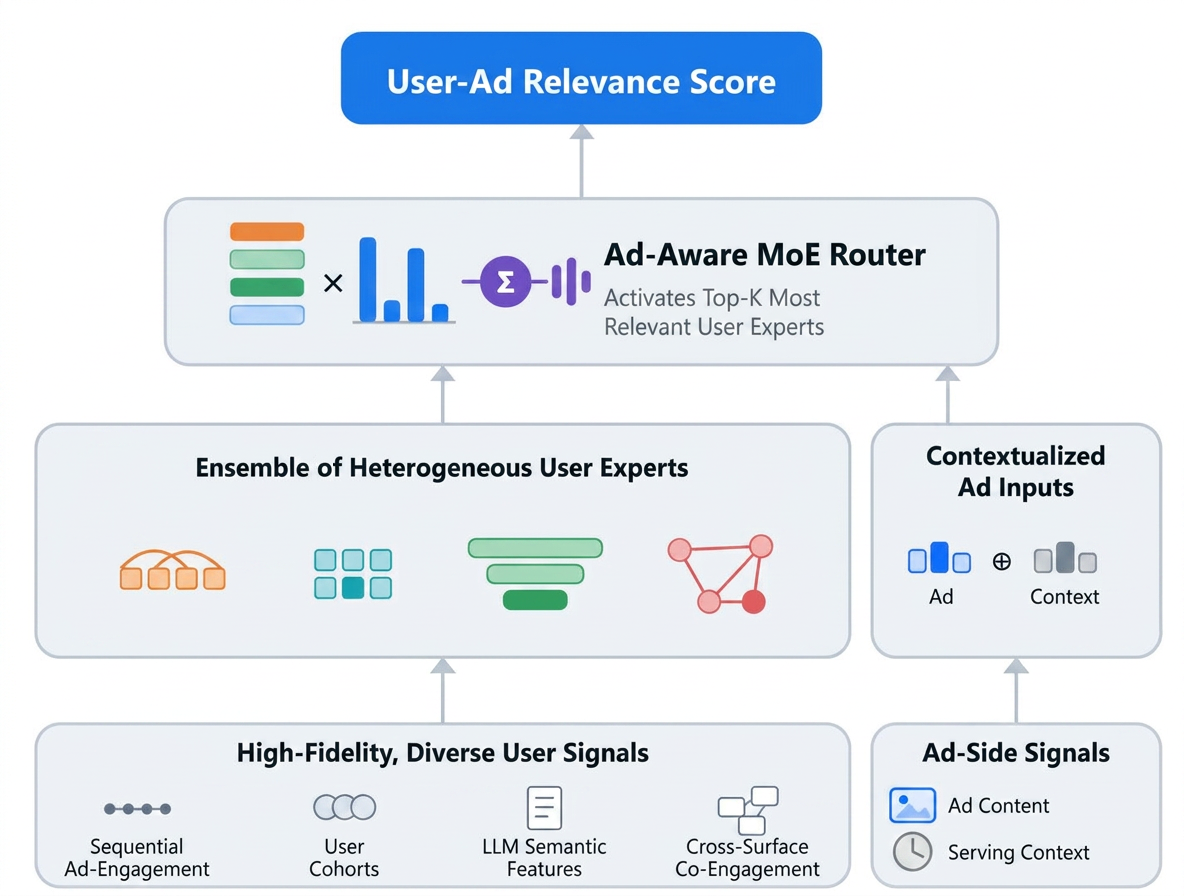
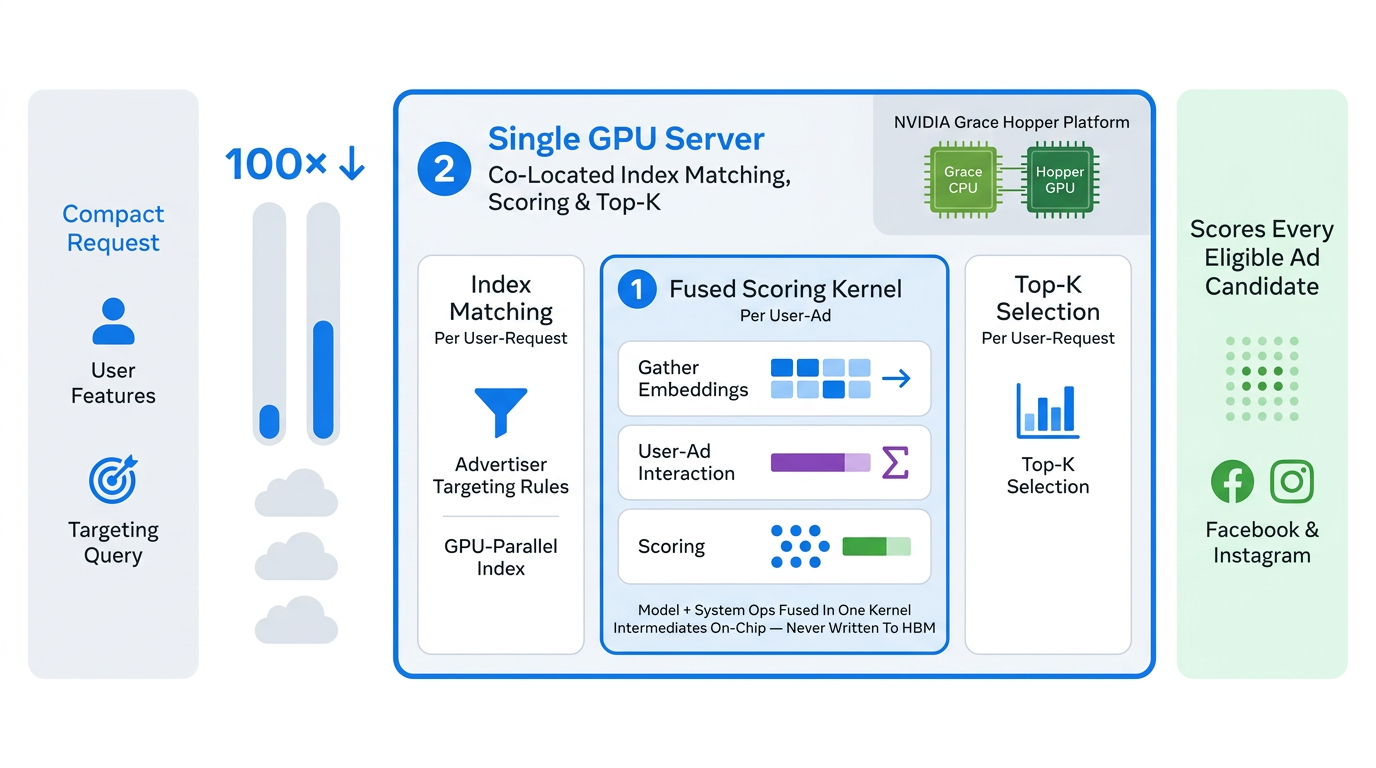
In its 28 October engineering announcement, Meta describes a mixture-of-experts architecture for Meta ads retrieval: specialised user models and context-aware ad representations help select candidates for later ranking. Matching, scoring and selection run together on a GPU server. Advertiser targeting rules remain part of matching.
Meta reports production throughput above one billion ads per second, approximately 100 times the 2024 system’s throughput. It separately reports model inference above ten billion ads per second and approximately 300 times fewer inference FLOPs than the earlier retrieval model. These measurements describe different scopes.
The company also attributes a 2.4% increase in Facebook conversions to Andromeda since 2025. That is a company-reported aggregate result, not an October-only lift or a forecast for an individual advertiser. The publication date does not establish when a particular Indian account experienced a delivery change.
How should you interpret the headline numbers?
A technical capacity metric answers an engineering question. Your advertising decision needs a commercial question. More processing capacity does not tell a founder what budget to spend, what a qualified enquiry should cost or how many ads their team must produce.
On mobile, swipe the table sideways to see every column.
| Headline | What it cannot tell you | Useful business check |
|---|---|---|
| Higher retrieval throughput | Your account will receive more impressions or cheaper traffic | Compare delivery and downstream outcomes using consistent reporting settings |
| Lower inference computation | Your media costs will fall by a similar proportion | Measure acquisition cost against your own margin or sales economics |
| Platform conversion improvement | Your campaign should beat its previous results by that percentage | Check mature purchase or lead cohorts before attributing a change |
| More sophisticated matching | Every new ad deserves equal spend or will become profitable | Separate an underexposed test from a sufficiently tested weak concept |
There is also a useful distinction between understanding the system and pretending to reverse-engineer it. An advertiser can observe delivery, costs and conversion outcomes. That does not reveal the internal retrieval score for each missed opportunity. Avoid presenting an inferred explanation as an account diagnostic fact.
For the related model terminology, see our Meta GEM explainer. Keep the names separate when discussing technical announcements; one label should not become an explanation for every change in an advertising account.
Which popular Andromeda 2.0 claims should you question?
“Every business now needs a fixed number of creatives”
A production target should come from useful hypotheses, available evidence and affordable testing. Ask what each additional ad will teach you. If a small business can only fund a few meaningful tests, commissioning dozens of minor variations creates a large production bill without necessarily producing interpretable results.
Use a manageable batch rather than a universal quota. A batch can contain one product demonstration, one objection-handling concept and one offer explanation when each addresses a distinct uncertainty. This is a planning example, not an algorithm requirement.
“All targeting is dead”
Do not remove genuine business boundaries because a commentator uses this phrase. A company serving Mumbai cannot fulfil enquiries from every city. A product unavailable in a region should not be advertised there merely to broaden reach. Keep the distinction between commercial constraints, campaign settings and assumptions about who might respond.
Testing a broader eligible audience can be a business experiment. It should have a clear question, valid service coverage and an outcome measure. It is not proof that all existing audience strategies must be discarded.
“Ten similar ads are officially treated as one”
The checked engineering announcement does not establish the popular universal rule that near-identical ads receive one shared “Entity ID” and therefore count as a single test. Do not use an unverified internal mechanism as a production brief.
There is still a sound operational reason to avoid endless cosmetic variants: changing a background colour rarely tells you whether customers need a demonstration, better proof or a different offer. Our creative diversification guide explains how to separate a concept from its executions.
“My results changed on that date, so Andromeda caused it”
A date match is a starting point for investigation. It is not causal evidence. In India, changes around a festive promotion can coincide with discounts ending, stock shortages, delivery deadlines, auction competition, customer demand and sales-team workload. Several may occur in the same week.
Do not change the creative, targeting, budget, landing page and offer together, then credit or blame the algorithm. You lose the ability to identify which intervention helped.
What does Andromeda 2.0 for advertisers mean in practice?
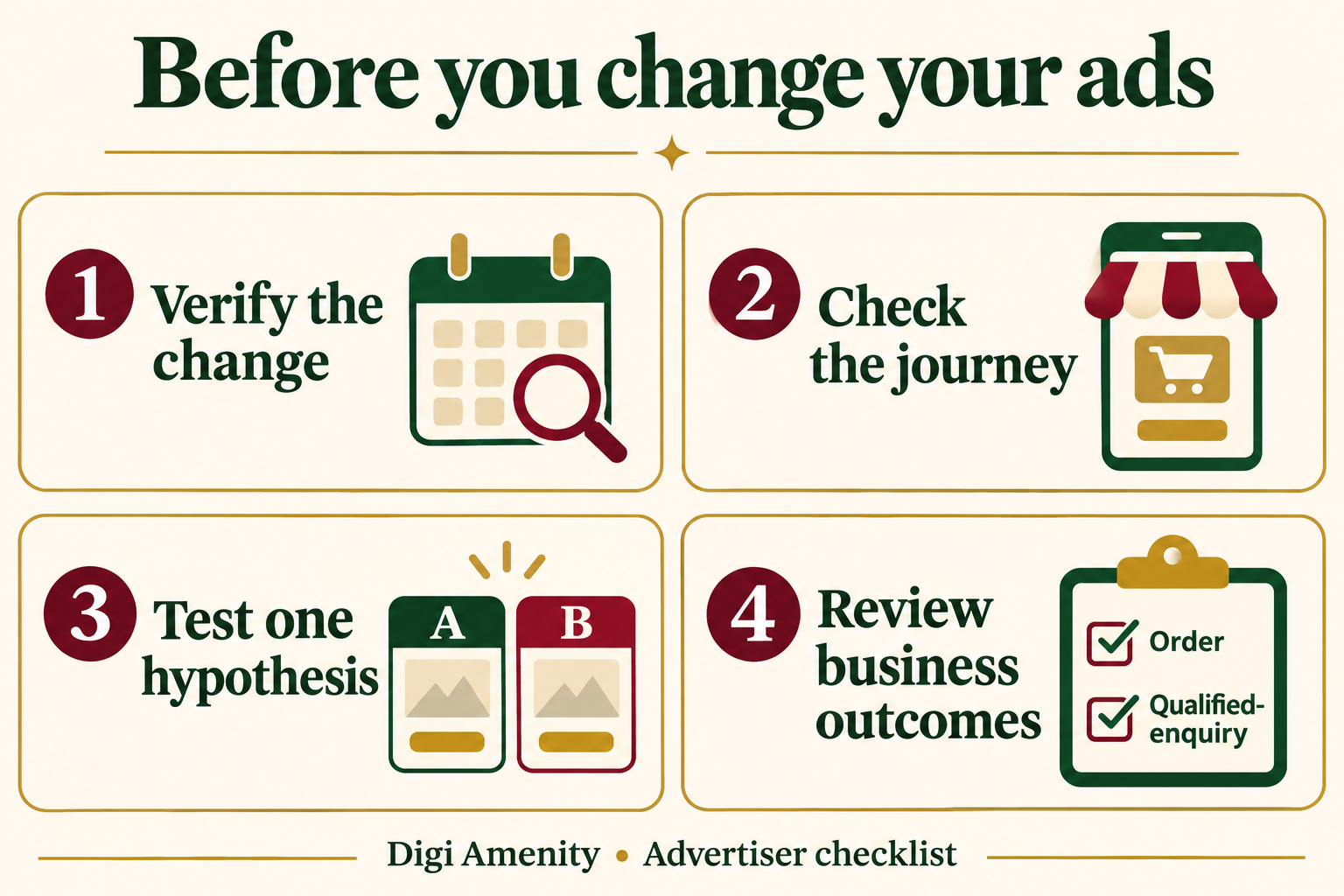
Start with a short change ledger. Record what changed, when it changed, who made the change and which metric should respond. Include website and operations changes, not only Ads Manager edits.
- Define the problem precisely. “Performance is down” is too broad. Is spend not delivering, paid traffic failing to arrive, checkout completion falling, or enquiry quality deteriorating?
- Freeze the comparison definition. Use the same currency, timezone, attribution settings and reporting filters. Compare complete periods with similar weekday coverage and explain promotions or seasonal differences.
- Check measurement against business records. Investigate gaps between reported purchases and actual orders, or reported leads and received enquiries. A discrepancy needs reconciliation before it becomes a strategy conclusion.
- Inspect the journey on a phone. Follow the ad to the actual destination. Check product availability, price consistency, delivery information, form usability and confirmation. A broken journey is not repaired by a new creative brief.
- Choose one intervention. State the expected mechanism, owner, spending boundary, observation window and stop condition before launching it.
When investigating tracking, review existing event diagnostics and integration records. Do not install an additional integration on top of an unknown setup just because a blog says more signals are better. Have the implementation owner establish which events fire, what they represent and whether repeated events are being counted correctly.
How should eCommerce brands respond?
Use the update discussion to improve the connection between the promise in the ad and the economics of the order. A campaign can look attractive in an advertising dashboard while delivering weak contribution after discounts, fulfilment costs, cancellations and returns.
Compare order cohorts that have had time to mature
For a business using cash on delivery, a placed order and a retained, paid order are different outcomes. Compare cohorts at the same age where possible. A recent cohort may not yet have completed delivery or the return window; labelling its apparent profitability as final would be premature.
Hypothetical example: two creative concepts each spend ₹30,000. Concept A produces 100 placed orders, of which 65 are retained after the agreed observation window. Concept B produces 80 placed orders, of which 64 are retained.
- A’s cost per placed order is ₹300; its cost per retained order is approximately ₹462.
- B’s cost per placed order is ₹375; its cost per retained order is approximately ₹469.
The placed-order comparison suggests a large advantage for A. The retained-order comparison is much closer. You still need net revenue, product margin and variable fulfilment costs to choose a winner. These illustrative totals do not prove statistical significance or a platform effect.
Brief creative around a purchase uncertainty
For a home-storage product, one test might show whether it fits a small cupboard. Another might explain assembly. A third could demonstrate actual capacity using measured dimensions. Each needs accurate supporting evidence and a matching product page.
Do not invent a testimonial or call a product “best-selling” without proof. If you lack evidence for a claim, change the concept to demonstrate something you can substantiate. Clearer proof is a useful production goal regardless of the latest algorithm name.
Keep the commercial offer consistent during the test
If the comparison ad uses a different discount or shipping offer, you are testing a combined creative-and-offer package. That can be valid, but label it correctly. It cannot isolate the effect of a hook or visual format.
Also record out-of-stock periods and delivery restrictions. A compelling demonstration that leads to an unavailable variant creates a different problem from weak ad relevance.
What should lead-generation businesses do differently?
Start by agreeing what a qualified lead means. The definition must be usable by the sales team and consistent across campaigns. A service business might consider service fit, location, a usable contact method and a genuine request for the service. Avoid redefining qualification after seeing campaign results.
Track the journey from enquiry to contact, qualification, appointment and sale using records appropriate to your business. A low cost per form submission can hide a high cost per sale when follow-up is slow or the advertised promise attracts the wrong need.
Hypothetical example: two campaigns each spend ₹18,000. A produces 90 enquiries and 12 qualified leads. B produces 60 enquiries and 15 qualified leads. A’s CPL is ₹200 and its cost per qualified lead is ₹1,500. B’s CPL is ₹300 and its cost per qualified lead is ₹1,200.
B looks more promising at qualification, but the decision remains provisional until both cohorts receive comparable follow-up and have enough time to progress. If one cohort was called during working hours and the other waited through a weekend, the comparison contains an operational difference.
Make suitability clear before the enquiry
A Mumbai-based installation business could test an ad that clearly states the service area, shows the type of work offered and explains the next step. Another concept could answer a common planning question using verified project information. The aim is informed enquiries, not maximum form volume at any cost.
Review the handoff as carefully as the creative. Does the enquiry reach the right person? Does someone own the first response? Is the reason for rejection recorded consistently? A better advertising system cannot make an unattended lead become a customer.
How should creative and media teams work together?
Give each proposed concept a one-page test brief. Keep the discussion focused on a customer decision rather than vague requests for “more Andromeda creatives.”
On mobile, swipe the table sideways to see every column.
| Brief field | What to write |
|---|---|
| Customer uncertainty | The specific question preventing a suitable customer from acting |
| Hypothesis | Why answering it could improve a defined business outcome |
| Proof | Approved demonstration, specification or other substantiation |
| Destination | The page or form that continues the same promise |
| Comparison | What stays consistent and what deliberately changes |
| Decision | When to review, what counts as insufficient evidence and when to stop |
Media buyers should return useful feedback. “Low spend,” “attention but few visits,” “visits but weak conversion” and “conversions with poor business quality” are different observations. Each suggests a different next investigation.
Do not mark an ad a creative failure merely because it received little delivery. It may remain untested for your question. Equally, do not force extra spend indefinitely to rescue an idea. Agree an affordable test boundary and use an appropriate controlled comparison when you need a causal answer.
What is a sensible 30-day response plan?
This is a planning framework, not a Meta-prescribed timetable. Adapt it to your sales cycle, conversion volume and operational capacity.
- Days 1–3: establish the baseline. Reconcile the problem, annotate recent changes and identify measurement or journey failures. Fix confirmed defects before interpreting creative results.
- Days 4–7: prepare one focused experiment. Select a customer uncertainty, gather proof, check the destination and agree the commercial outcome. Limit the scope to what your budget can evaluate.
- Days 8–21: observe and document. Record delivery, business outcomes, changes and unexpected factors. Intervene for broken functionality or a predefined spending limit; avoid reacting to every daily fluctuation.
- Days 22–30: decide or defer. Compare equally mature cohorts. Keep, revise, stop or mark the test inconclusive. If your sales cycle is longer than a month, continue observation rather than manufacture a winner.
Use this decision ledger in a spreadsheet: test ID, customer question, concept, proof source, destination, start date, comparison, spend boundary, reporting definition, cohort age, business outcome, confounders, decision and owner. A blank outcome is preferable to a made-up zero when the data has not arrived.
Frequently asked questions
Is Andromeda 2.0 an official Meta product name?
No such name appears in the checked engineering announcement. In this article, “2.0” identifies the discussion around the October next-generation update. When sharing the article internally, preserve that qualification so an industry label does not become a supposed Ads Manager feature.
Does the announcement prove my account changed on 28 October?
No. Treat that date as the publication milestone. An account-level change needs account evidence. Keep a dated record of campaign edits, promotions, site changes and operational issues before attributing a movement in performance.
Should I rebuild all my campaigns?
Not on the strength of the announcement alone. Identify a specific problem first. If an existing campaign meets your business objective, use a bounded experiment to investigate an alternative rather than replacing a working setup without a comparison.
How many ads should a small business test?
Choose a number your budget and production capacity can evaluate meaningfully. Prioritise distinct customer questions over many surface variations. If each concept receives too little evidence to support a decision, reduce the batch or extend the observation period within an agreed spending limit.
Do I need AI-generated creatives?
This review does not establish AI-generated assets as an advertiser requirement. Choose production methods based on truthful product representation, available proof, cost and usefulness. Human review is still necessary, particularly for demonstrations, testimonials, specifications and offers.
Will broader targeting always improve performance?
No universal outcome follows from a technical announcement. Broader reach can be tested where commercially appropriate, but retain service-area and fulfilment constraints. Judge the experiment on the quality and economics of the resulting business, not reach alone.
Which metric should I prioritise?
For eCommerce, connect acquisition cost with retained orders and contribution. For lead generation, connect enquiry cost with qualification and eventual sales. Use attention and click metrics to investigate the journey, while keeping the final decision tied to a defined business outcome.
How long should I wait before deciding a test worked?
Long enough for the chosen outcome to mature and for the comparison to provide useful evidence. A same-day purchase and a multi-week sales process require different windows. Set review dates in advance, distinguish insufficient evidence from failure, and keep an affordable stop condition.
Need help deciding what to change?
If your Meta results have shifted, Digi Amenity can review the change history, creative hypotheses, tracking and purchase or enquiry journey before recommending a restructure. Explore our Meta advertising services for a review tied to your business outcomes.
